Acknowledging the Limits, Creating Tomorrow: Dutch Leadership for Sufficiency and Well-being
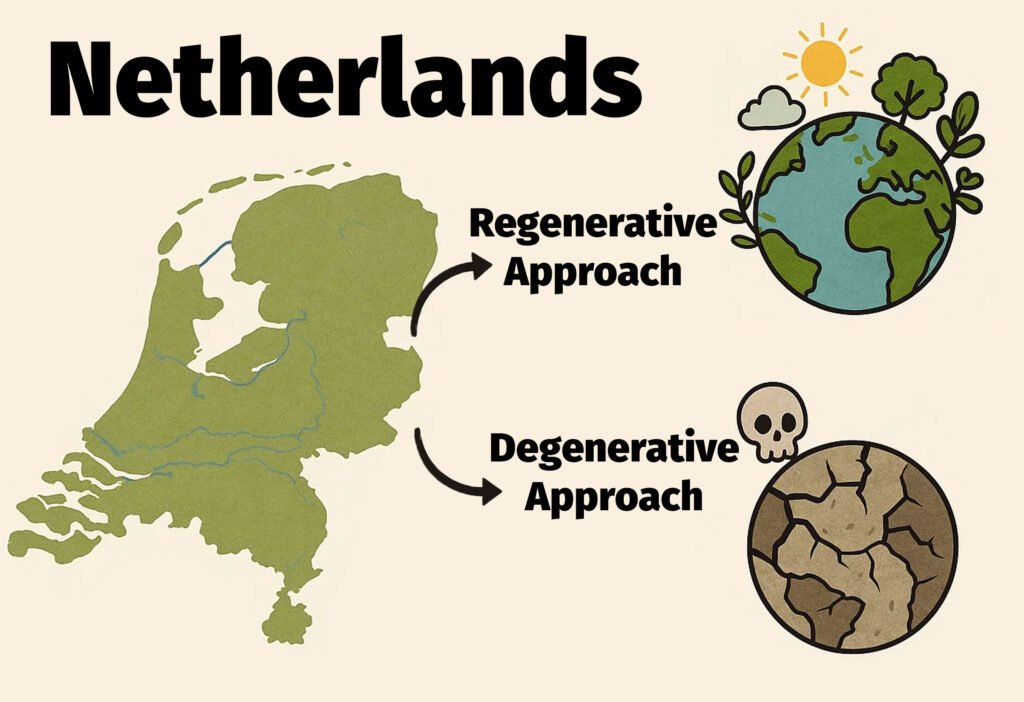
Authored by Tanner Tuttle, MSc. (One Planet Port). Summary The irony is stark: the Netherlands is hailed as a global agricultural and trade powerhouse, yet its model erodes its own ecological integrity and entrenches extractive, profit-driven dynamics that harm farmers and food sovereignty worldwide. Polycrises of sea-level rise, water stress, nitrogen and biodiversity breakdown, grid […]
Understanding Scope 3 Emissions: New Report on the Port of Rotterdam
Late last year, a significant report titled Analysis of Climate Plans for the Port of Rotterdam was published by CE Delft. This research effort represents one of the most comprehensive public attempts to estimate the Scope 3 greenhouse gas emissions linked to the Port of Rotterdam. The report is available online via CE Delft’s website […]
OPP Participates in RDi Hosted “Een Kano Naar Zee” Screening and Discussion: Reflecting on the Rotterdam Port’s Past, Present and Future
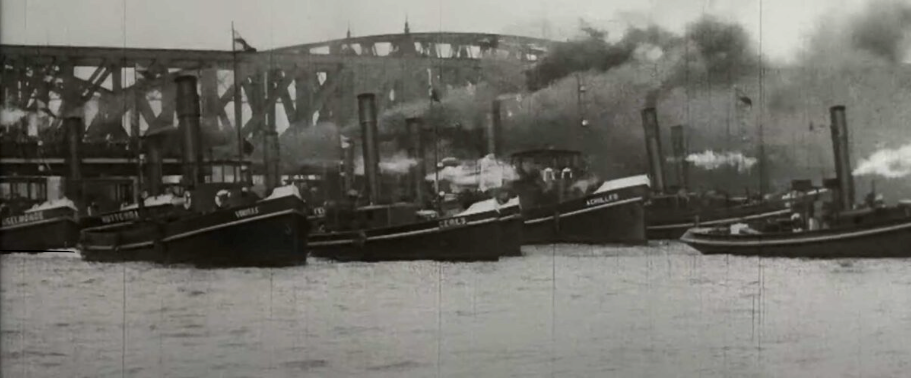
On Tuesday, May 27, 2025, One Planet Port participated with the Resilient Delta Initiative (RDi) who welcomed guests to a special screening of Een Kano Naar Zee (A Canoe to the Sea) at LantarenVenster in Rotterdam. This poignant documentary explores the evolution of the Port of Rotterdam, from its historic roots to the present-day industrial hub, and […]
OPP Contributes to UN Task Force on Reactive Nitrogen with Expert Input on Ammonia as an Energy Carrier
One Planet Port (OPP) is proud to share that we recently contributed expert insights to a United Nations publication on the emerging role of ammonia as an energy carrier. This milestone is part of the ongoing work of the Task Force on Reactive Nitrogen (TFRN) under the UNECE Air Convention. What Is the Task Force […]
Impact of Dutch Scrubber Wastewater Ban on Marine Ecosystems: A Vital Win, But More Action Is Needed
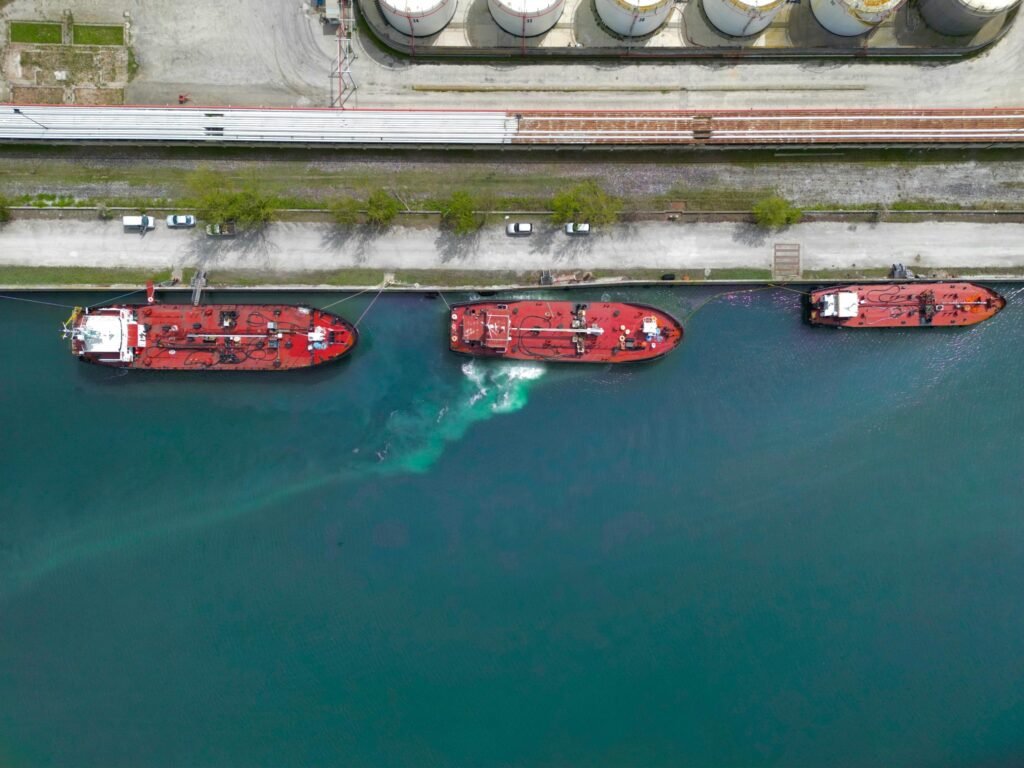
The Dutch government has taken a significant step to protect our waterways: seagoing vessels will soon be prohibited from discharging scrubber wastewater into Dutch ports and inland waters (Schuttevaer, 2025). This move, announced by Infrastructure and Water Management Minister Barry Madlener this week, especially targets the use of open loop scrubbers — systems that use seawater to strip sulfur […]
Exploring Project Value Modelling with TU Delft for Community-Congruent Policy
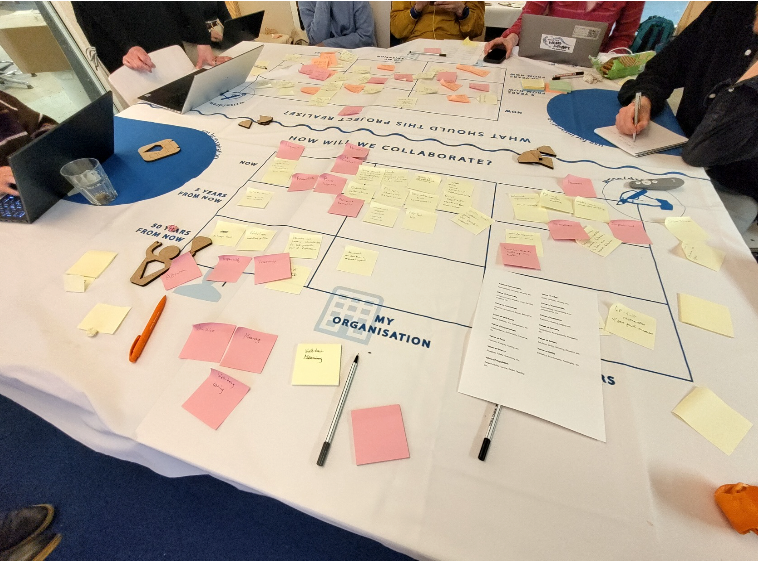
As part of One Planet Port’s Community Cohesion pillar of work, we recently hosted a pilot workshop at our BlueCity office to explore how value-based methodologies can support communities in co-creating policies that truly reflect their collective priorities. Led by Dr. Marina Bos-de Vos, and her research team from TU Delft, the session introduced participants to the Project Value […]
Maritime Vessels to Blood Vessels: Rethinking the Circulatory System of Global Trade
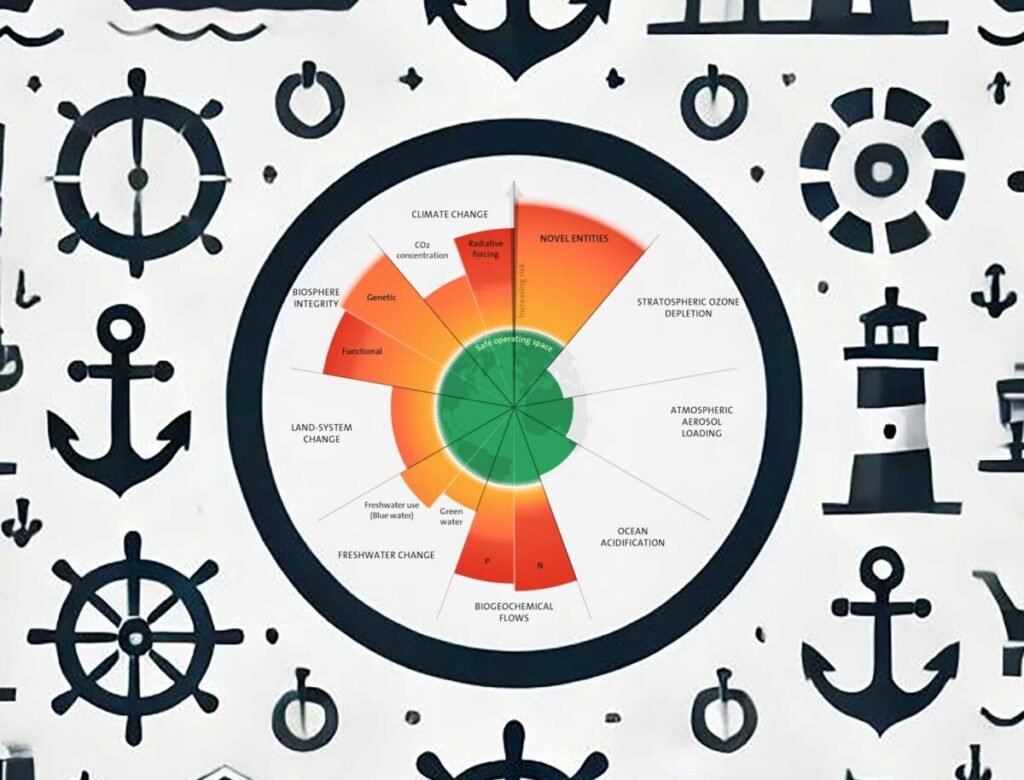
Ports are the lifeblood of global trade, but they also exert complex pressures on Earth’s critical systems. As the Port of Rotterdam charts its future, we must ask: How can it evolve to operate within the Earth’s environmental limits, while ensuring justice and resilience for all? The planetary boundaries framework, developed by the Stockholm Resilience […]
Maritime Vessels to Blood Vessels: Rethinking the Circulatory System of Global Trade
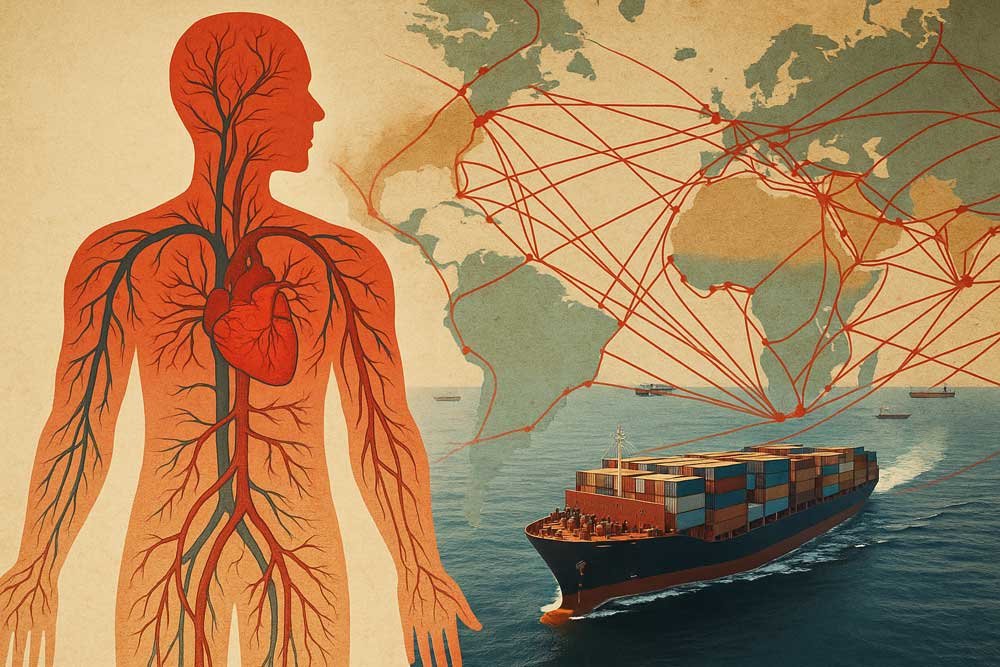
Just as blood vessels circulate oxygen and nutrients to keep the human body alive, global maritime shipping routes circulate goods, raw materials, and energy, fueling economies across the planet. This circulatory system of trade links continents, supplies industries, and feeds billions of consumers. Like a body dependent on the smooth function of its vascular system, […]